





Pedagogical Approach
Deep, transformative learning has characterised Jesuit, Catholic education for 500 years.
Our approach is rooted in our world-renowned pedagogical approach that provides students the tools to analyze the context in which they live, to evaluate and reflect on lived experience and empower them to take action. Our program leads students to a meaningful life of leadership and service rooted in intellectual competence, compassion for oneself and others, actions guided by conscience, and a commitment to a just global society.
Ignatian Pedagogical Paradigm (IPP)
A world-renowned pedagogical approach.
Our university-preparatory program offers a wide range of academic, athletic, artistic, spiritual and other life-formative activities that provide students the opportunity to develop their full potential to become enriched and well-rounded individuals. Our students experience a level of love and commitment that is unlike any other school. The care and expertise of our faculty and staff sets us apart as we help educate, guide, and develop the whole person.


Our program leads students to a meaningful life of leadership and service rooted in intellectual competence, compassion for oneself and others, actions guided by conscience, and a commitment to a just global society.
Rooted in the Spiritual Exercises of St. Ignatius, this unique approach is why for nearly 500 years Jesuit education has enjoyed an unsurpassed global reputation for excellence in developing reflective, critical thinkers and problem solvers who go on to be leaders in our society.
Lab22
Committed to Socio-Ecological Transition
Since the 2025–2026 school year, Loyola High School has been working with Lab22, a nonprofit organization that supports secondary schools across Quebec in their socio-ecological transition. This process involves rethinking environmental practices, social relationships, and institutional choices to build a more sustainable, equitable, and responsible school community.
By signing the Pacte de l’école québécoise, Loyola committed to a process of institutional transformation that examines how we use resources, teach and learn, and engage with the world around us.
Rooted in Our Jesuit Mission
This work is grounded in the Jesuit tradition and the Society of Jesus’ Universal Apostolic Preferences, particularly the call to in collaborate with others in the Care for our Common Home.
At Loyola, Caring for our Common Home extends beyond environmental stewardship. It is an integral part of educating young people to become thoughtful, engaged, and responsible members of society, equipped to contribute to a more just and sustainable world.
From Commitment to Action
Loyola has established a Steering Committee, conducted a comprehensive assessment of the school’s environmental practices, and developed a three-year action plan.
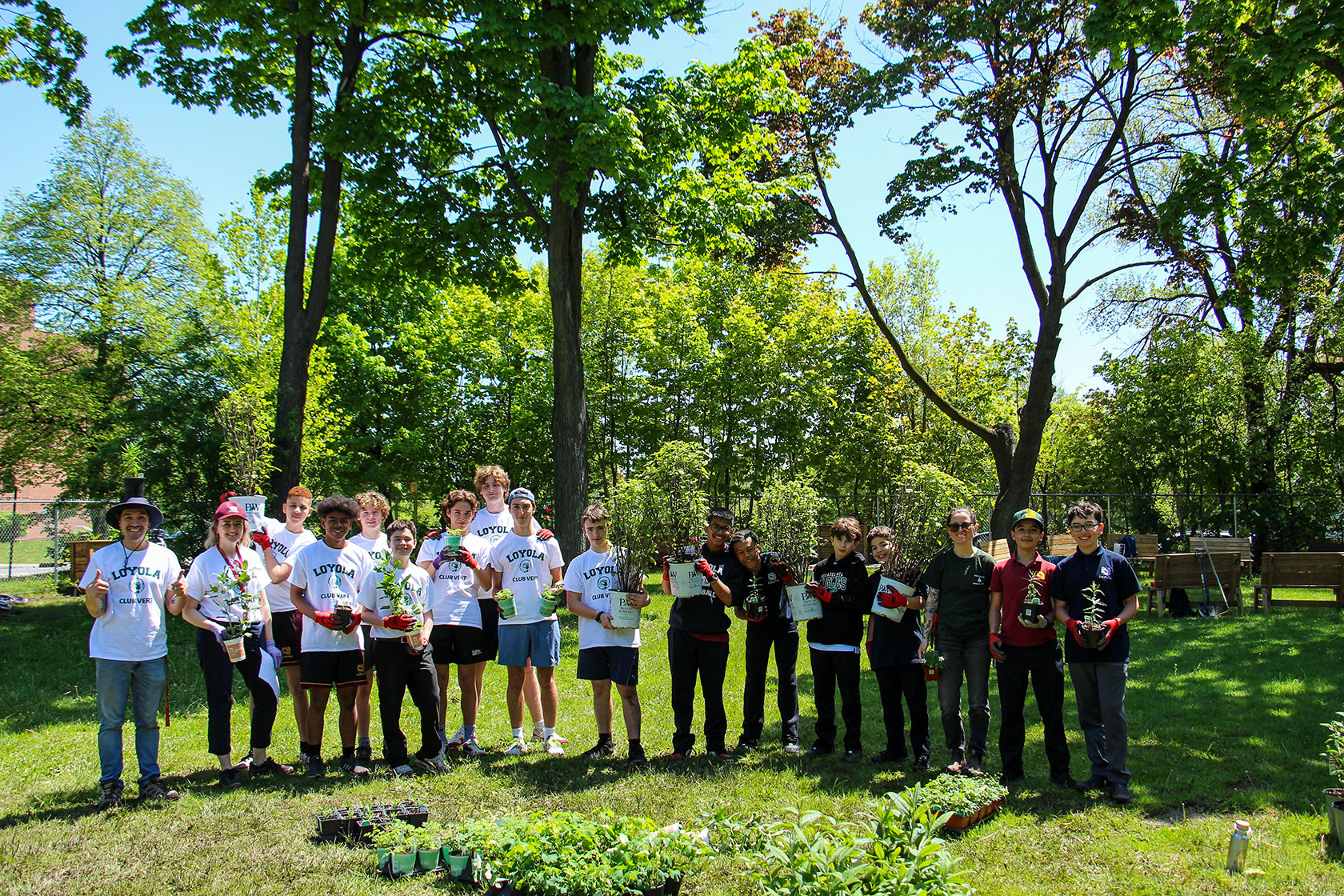
Students and staff are also helping advance this work through initiatives led by the Green Club, Student Council, and Campus Ministry.
Concrete initiatives are taking shape across the school:
- Greener learning spaces: Creating an outdoor learning environment in the West Broadway school garden, offering opportunities for cultivation, contemplative walks, and outdoor classes.
- More responsible waste management: Implementing selective waste collection.
- Community partnerships: Strengthening collaboration with local organizations, such as West Haven and Concordia University.
- Environmental education: Reviewing the curriculum to enhance environmental learning and integrate ecological perspectives across subject areas.
Loyola’s socio-ecological transition is an ongoing process of learning, collaboration, and action. Guided by our Jesuit mission, we will continue to foster a culture of responsibility and help students put care for our Common Home into practice.
On April 26, 2027, Loyola will host Transition Day in collaboration with Lab22. The event will bring together students from across Quebec who are eager to take action and advance the ecological transition in their schools.